
How to Install a 1 Tonne Per Hour Biomass Pellet Plant in India: A Complete Guide by SERVODAY GROUP
Your Complete Guide to Establishing a High-Efficiency, 1 TPH Biomass Pellet Production Unit in India with SERVODAY GROUP’s Turnkey Solutions
Are you looking to enter the booming biomass energy market in India? Installing a 1 tonne per hour (TPH) pellet plant is a strategic entry point. This comprehensive guide walks you through every critical step—from assessing raw material availability to final commissioning. Drawing exclusively on expertise from SERVODAY GROUP, a premier Pellet Plant and Machinery supplier for Biomass and Wood, we cover plant selection (conventional vs. portable), site preparation, infrastructure needs, and the installation process. Whether you choose a custom-built unit or the innovative SERVODAY PELLETBOX, learn how to launch a profitable and sustainable pellet production line in India.
Introduction
The demand for biomass pellets in India is surging, driven by government mandates for co-firing in thermal power plants and the growing need for clean industrial fuel. Installing a 1 Tonne Per Hour (TPH) pellet plant is an ideal scale for entrepreneurs looking to enter this sector with a manageable yet profitable operation.
As a leading Pellet Plant and Machinery supplier for Biomass and Wood, SERVODAY GROUP offers comprehensive solutions tailored to the Indian market. Their expertise spans from conventional turnkey plants to innovative portable systems, ensuring that whether you are in Gujarat, Karnataka, or Madhya Pradesh, you have access to reliable, high-performance machinery.
This guide aggregates technical specifications, installation methodologies, and planning insights directly from official SERVODAY GROUP resources.
Step 1: Defining Your Plant Requirements
Before purchasing equipment, you must define your project goals. A 1 TPH plant is versatile, suitable for small-scale industrial users or as a pilot unit for larger expansion.
Key Considerations:
- Target Capacity: A 1 TPH (tonne per hour) plant operating at 70-80% efficiency can produce approximately 5,600 to 6,400 tonnes of pellets annually.
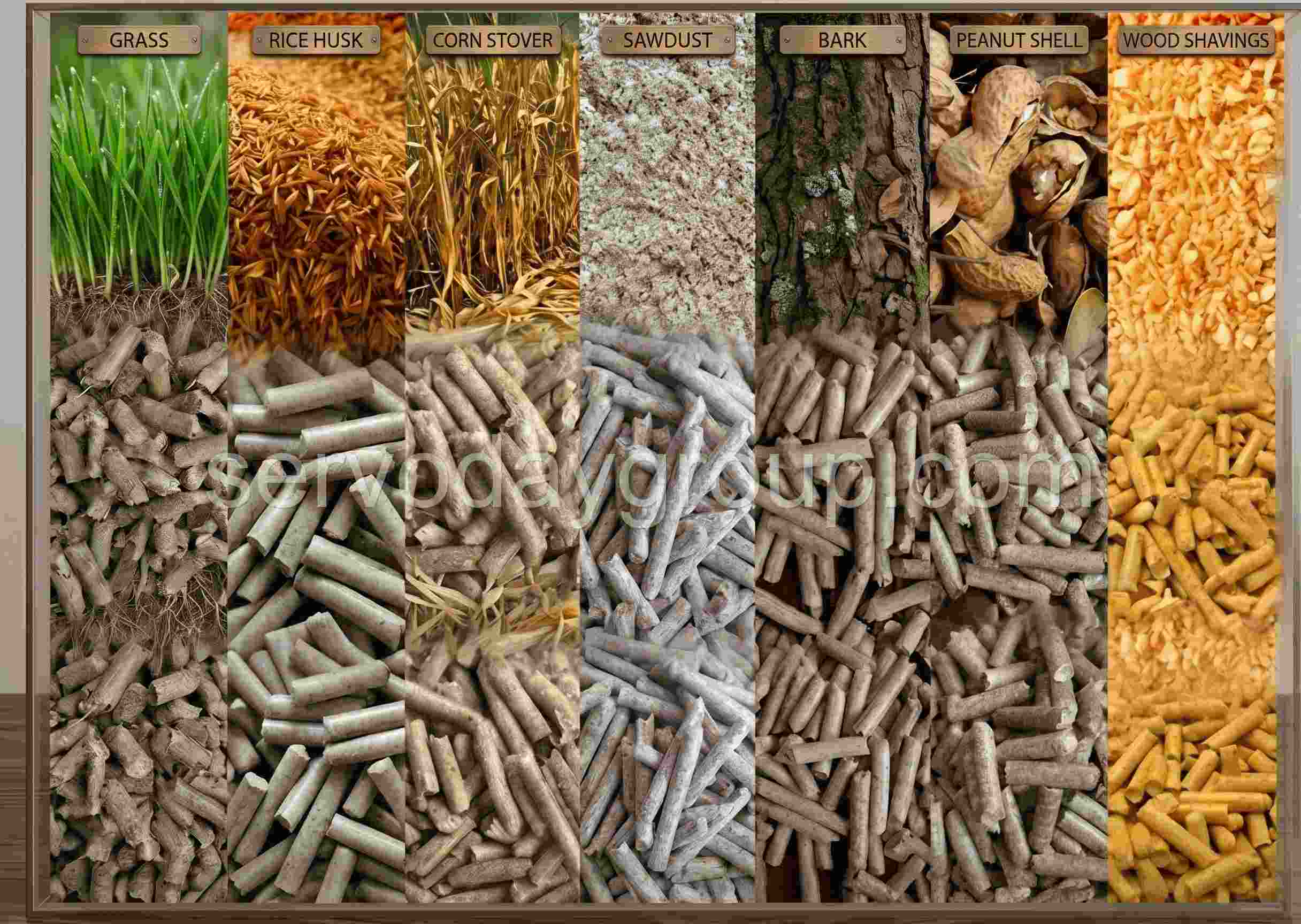
- Raw Materials: Indian biomass varies by region. A robust pellet plant must handle:
- Agricultural Residues: Paddy straw, sugarcane bagasse, mustard stalks, cotton stalks, groundnut shells.
- Forestry Waste: Wood chips, sawdust, and bark.
- End Use: Determine if your pellets are for industrial boilers, power generation (e.g., supplying to NTPC or Tata Power), or animal bedding.
According to industry guides, you must also secure a stable raw material supply chain and assess seasonal availability in your district.
Source: Quick Guide to Building a Pellet Plant (https://pelletmill.in/content/pellet-plant-project-setup-guide)
Step 2: Choosing the Right 1 TPH Plant Configuration
SERVODAY GROUP offers two primary configurations for 1 TPH capacity: the Conventional Plant and the Mobile/Portable Plant.
2.1 Conventional Wood and Biomass Pellet Plant
This is a permanent setup designed for longevity and high-volume production. It utilizes heavy-duty ring die technology to produce dense, uniform pellets.
- Structure: Built on concrete foundations with dedicated sheds for raw material, processing, and storage.
- Scalability: SERVODAY GROUP designs these plants with modular scalability, allowing you to expand from 1 TPH to 2 TPH or 4 TPH without overhauling the entire system.
- Components: Includes advanced pre-processing systems for size reduction, drying, and conditioning.
Source: High-Efficiency Wood Biomass Pellet Plant (servodaygroup.com)
2.2 The SERVODAY PELLETBOX (Mobile Solution)
For entrepreneurs concerned about land acquisition or those who want to move closer to seasonal biomass sources, the SERVODAY PELLETBOX is revolutionary.
- Concept: A containerized, plug-and-play biomass pellet plant.
- 1 TPH Model: Offers a production capacity of 1.0 TPH.
- Footprint: Requires minimal space (approx. 60 m²) and comes housed in a marine container, drastically reducing civil construction costs.
- Mobility: Can be easily relocated, making it ideal for remote or off-grid locations in India.
Source: Revolutionizing Portable Pellet Production - SERVODAY PELLETBOX (biomasspelletmachinery.com)
Comparison Table: 1 TPH Plant Configurations by SERVODAY GROUP
Feature | Conventional Pellet Plant | SERVODAY PELLETBOX (Mobile) |
Capacity | 1.0 TPH | 1.0 TPH |
Footprint | ~120 m² (approx.) | ~60 m² |
Installation | Foundation & civil works required | Plug-and-Play, minimal setup |
Mobility | Fixed / Permanent | High (Containerized) |
Power Requirement | 300-350 kW | 200-250 kW |
Best For | Long-term, high-volume production | Seasonal locations & low Capex start |
Step 3: Site Selection and Infrastructure Planning
Once you have selected the machinery type, preparing the site is crucial.
Land Requirements
- Conventional Plant: For a 1 TPH plant, you typically need a minimum of 1,500 to 2,000 square meters. This includes space for raw material storage (which takes significant volume), the production hall (approx. 120 m² for the main equipment), finished goods storage, and truck access.
- Portable Plant: The SERVODAY PELLETBOX requires significantly less space (starting from 50 m²), but you still need space for biomass stockpiles.
Power and Utilities
- Power Consumption: A 1 TPH plant requires substantial power. The SERVODAY GROUP Conventional plant requires approximately 300-350 kW, while the more efficient PELLETBOX requires 200-250 kW.
- Power Source: Given power fluctuations in some Indian states, installing a Voltage Stabilizer or a backup Diesel Generator (DG) set is highly recommended to protect the motors.
Manpower
- Labor: Modern SERVODAY GROUP plants are highly automated. A 1 TPH plant typically requires 2 to 3 operators per shift for feeding, monitoring the control panel, and managing output.
- Technical Support: Basic mechanical knowledge is sufficient as SERVODAY GROUP provides commissioning support.
Source: Advancing Biomass Pellet Production in Karnataka (biomasspelletmachinery.com)
Step 4: The Core Machinery and Process Flow
A 1 TPH pellet plant is not just a pellet mill; it is a system of integrated components. SERVODAY GROUP provides turnkey solutions covering the entire process.
4.1 Pre-Processing (Size Reduction)
Raw materials like sugarcane bagasse or mustard stalks must be reduced to a uniform size (less than 6mm).
- Equipment: Hammer Mills or Crushers.
4.2 Drying
Moisture content is critical. For optimal pelletization (die & roller technology), moisture should be between 10-15%.
- Process: If your raw material is green wood or fresh agri-waste, a rotary drum dryer is necessary to flash off excess moisture.
4.3 Pelletization (The Core)
- The Machinery: The heart of the SERVODAY plant is the high-performance pellet mill utilizing heavy-duty ring die technology.
- Mechanism: The conditioned biomass is forced through the rotating die holes under high pressure. The friction generates heat, which melts the natural lignin in the biomass, binding the pellet together.
- Output: Dense, uniform pellets with low "fines" (dust).
4.4 Cooling and Screening
Pellets exit the mill at temperatures between 80°C to 90°C.
- Equipment: A counter-flow cooler reduces the temperature and moisture, hardening the pellet.
- Screening: A vibrating screen removes the fine dust (fines) and routes them back to the pellet mill for re-processing.
4.5 Packaging
The finished pellets are conveyed to a silo or bagging station.
Source: Turnkey Solutions in Andhra Pradesh (servodaygroup.com)
Step 5: Installation and Commissioning Process
The installation timeline differs between the two types of plants.
For Conventional Plants
- Site Design: SERVODAY GROUP provides engineers to design the layout based on your specific land dimensions.
- Civil Works: Construction of foundations for the pellet mill, dryer, and cooler. This takes the longest time (4-6 weeks).
- Equipment Assembly: The heavy components (ring die mill, hammer mill) are bolted and aligned.
- Electrical & Piping: Wiring the control panel and connecting motors.
For the SERVODAY PELLETBOX (1 TPH)
- Fabrication & Testing: The entire plant is fabricated and tested at the SERVODAY GROUP facility.
- Transport: The container is loaded onto a flatbed truck and delivered to your site in Gujarat, Karnataka, or anywhere in India.
- Plug-and-Play Setup: On-site installation involves:
- Placing the container on a flat, hard surface (no foundation needed for some versions).
- Connecting the main power supply.
- Connecting water (if required for conditioning).
- Timeline: A 1 TPH PELLETBOX can be ready for production within 24 to 48 hours of arrival.
Source: Innovative Biomass Solutions in Madhya Pradesh (servodaygroup.com)
Why Choose SERVODAY GROUP as Your Supplier?
SERVODAY GROUP stands out as a premier Pellet Plant and Machinery supplier for Biomass and Wood in India. Here is why they are the preferred partner for 1 TPH plants:
- Proven Track Record: With decades of expertise, they have a deep understanding of local biomass challenges.
- Comprehensive Turnkey Solutions: They do not just sell machines; they offer complete solutions covering site design, installation, and commissioning. This ensures a seamless transition to full-scale production.
- Flexibility: Whether you need a massive fixed installation or a small 1 TPH mobile unit, their modular and scalable design fits your budget.
- Sector Connections: For those selling pellets, SERVODAY GROUP can help connect you with major off-takers like NTPC Limited, APGENCO, and Adani Power, who are aggressively using biomass for co-firing.
- Robust Technology: Their use of heavy-duty ring die technology ensures low operational costs and high durability, specifically designed to handle abrasive Indian agricultural residues like paddy straw and cotton stalks.
Source: High-Efficiency Wood Biomass Pellet Plant (servodaygroup.com)
Installing a 1 tonne per hour biomass pellet plant in India is a significant investment with high return potential, given the nation's push for renewable energy. By partnering with SERVODAY GROUP, a leading Pellet Plant and Machinery supplier for Biomass and Wood, you mitigate the risks of equipment failure and logistical delays.
Whether you opt for the robust, high-output Conventional Pellet Plant requiring ~120 m² of space or the agile, Plug-and-Play SERVODAY PELLETBOX that minimizes civil work, the key to success lies in proper planning and choosing a supplier with a pan-India presence.
Call to Action: Ready to start your pellet production journey? Contact SERVODAY GROUP today for a detailed site assessment and a customized quote for your 1 TPH plant.
Click here to get quote for Pellet Plant https://woodpellet.in/bot/plant-inquiry
Source Links:
- Click here to get quote for Pellet Plant https://woodpellet.in/bot/plant-inquiry
- High-Efficiency Wood Biomass Pellet Plant (servodaygroup.com)
- Quick Guide to Building a Pellet Plant (https://pelletmill.in/content/pellet-plant-project-setup-guide)
- Revolutionizing Portable Pellet Production - SERVODAY PELLETBOX (biomasspelletmachinery.com)
- Advancing Biomass Pellet Production in Karnataka (biomasspelletmachinery.com)
- Turnkey Solutions in Andhra Pradesh (servodaygroup.com)
- Innovative Biomass Solutions in Madhya Pradesh (servodaygroup.com)

Comments
Author Name
Author Comment
Leave a Feedback